The Geological Memory of Sedimentary Stone
In an era where synthetic surfacing and hyper-polished ceramics dominate industrial interior fit-outs, natural Roman travertine offers an almost meditative counter-narrative. Formed through rapid mineral precipitation from geothermal hot springs over tens of thousands of years, travertine bears literal geological history within its open pores and calcite ribbons.
When we specify travertine for our private residential commissions in Kolkata and international penthouses, we reject the conventional impulse to fill every cavity with synthetic resins. Left in its tactile, honest state—merely honed or brushed by hand—travertine softens daylight, cools the foot, and absorbs acoustic harshness.
“Travertine does not demand attention; it quietly commands reverence through weight, temperature, and quiet geological cadence.”
— Arjun Devraj, Founding Principal
Vein-Cut vs. Cross-Cut: The Art of Direction
A single quarry block of Roman travertine can yield two entirely divergent architectural expressions depending strictly on the sawing orientation.
A vein-cut (taglio contro falda) slices parallel to the sedimentary bedding planes, revealing linear stratifications that elongate spatial perspective and impart directional velocity to gallery corridors and monolithic kitchen islands. Conversely, a cross-cut (taglio a falda) slices across the strata, presenting clouded, painterly swirls reminiscent of ancient Roman piazza flagstones.
In our recent Bellevue Penthouse commission, we employed vein-cut Roman Navona slabs on the primary hearth wall to draw the eye upward toward the 4.2-meter double-height glazing, while transitioning to cross-cut floor tiles to evoke a grounded, grounding courtyard feeling indoors.
Tactile Counterpoints: Pairing Stone with Warm Oak
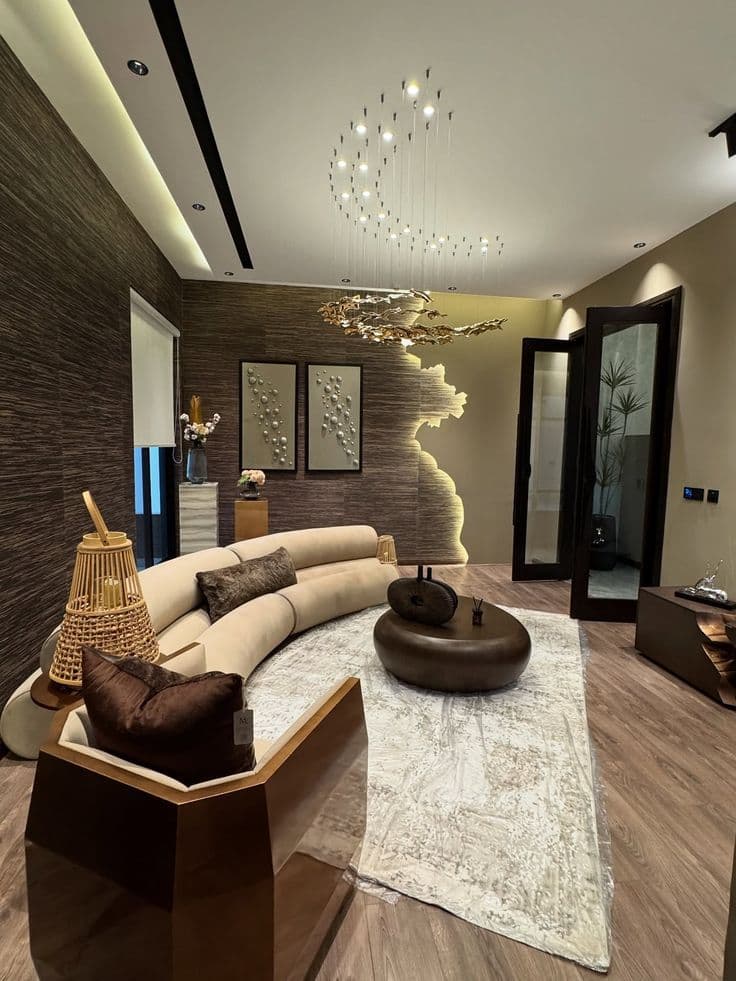
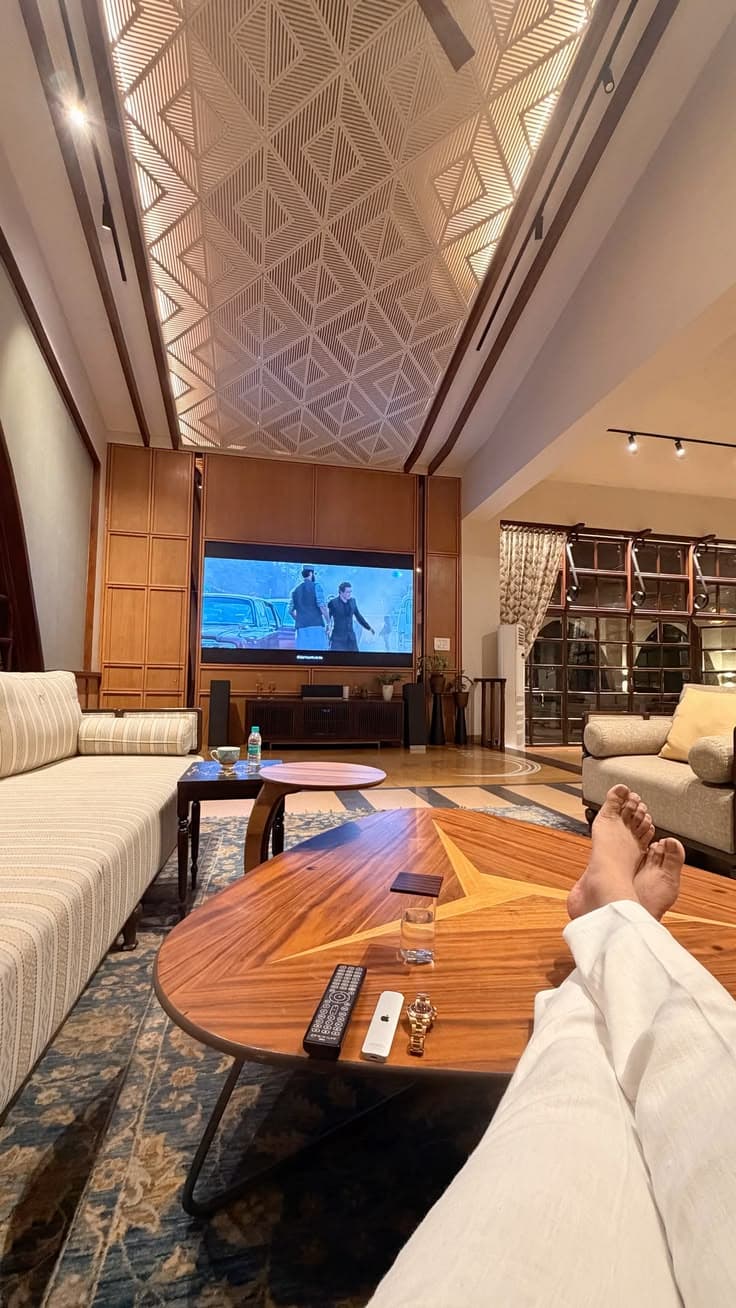
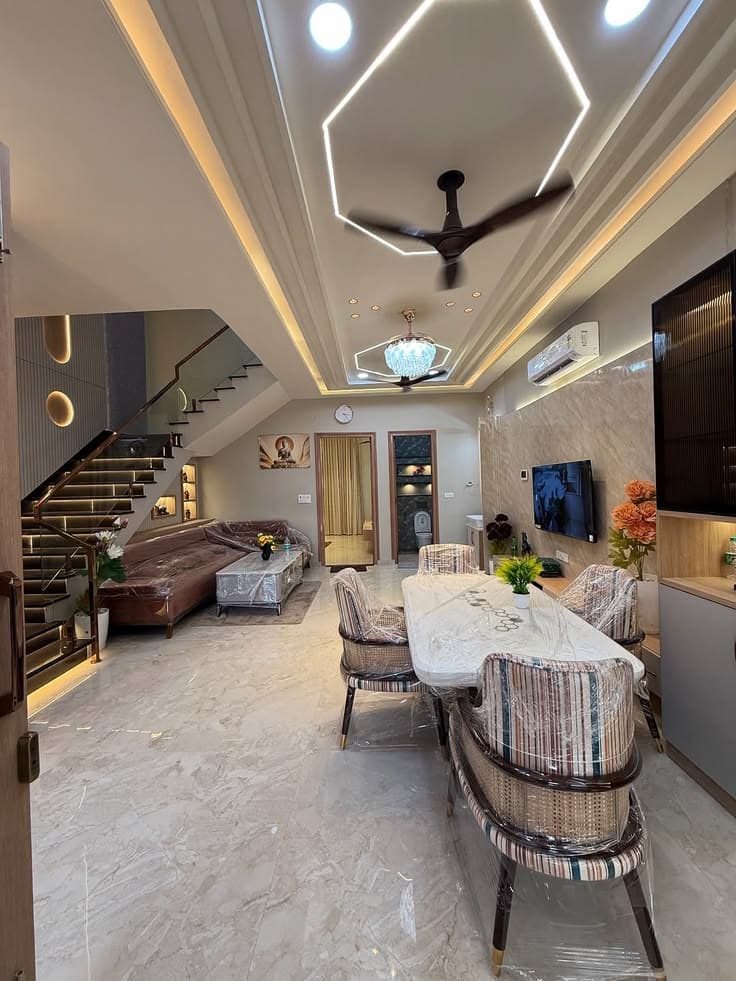
Stone without warmth risks feeling institutional. The architectural secret to serene minimalism lies in deliberate tactile friction: placing the cool, monolithic density of natural limestone directly against warm, open-grained French smoked oak or hand-planed walnut.
When cold mineral surfaces meet warm timber joinery, each material elevates the other. The eye perceives stability in the stone, while the hand seeks comfort in the oil-finished wood.
- Avoid synthetic poly-fills; embrace micro-honed matte finishes that celebrate open mineral pores.
- Use vein-cut travertine to establish architectural axes and cross-cut travertine for expansive, tranquil planes.
- Balance massive stone volumes with organic textiles—bouclé, raw Belgian linen, and smoked timber millwork.
The Patina of Time: Living with Noble Materials
Luxury architecture should not fear age; it should welcome it. A travertine threshold buffed smooth by decades of footsteps carries an emotional resonance that factory-sealed quartz can never emulate.
By specifying noble materials that patinate rather than deteriorate, DA Interiors designs homes meant to be lived in deeply, celebrated across generations, and handed down as enduring architectural heirlooms.
A Material for the Centuries
As residential design turns away from fleeting visual trends toward grounded serenity, Roman travertine remains the definitive foundation of modern architectural living.
Arjun Devraj
Founding Principal & Architectural Director
Arjun leads architectural masterplanning at DA Interiors. Trained in London and Milan, his work interrogates the intersection of monolithic stone geometry and contemplative natural light.